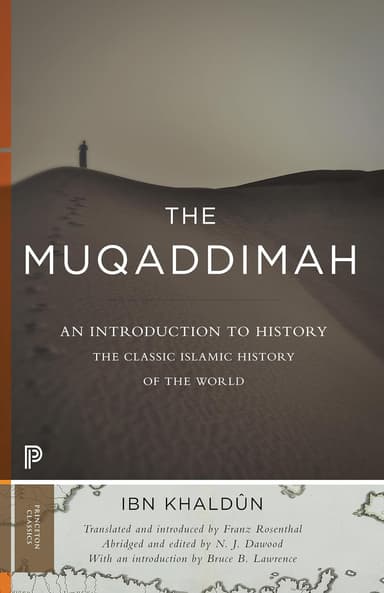
With The Muqaddimah, Ibn Khaldun attempts to create a science of how civilizations work. It is written as an introduction to his world history, but it became far more influential than the history itself. You can read more by clicking the title.
My Notes
Khaldun writes about the concept called Assabiyah. It is about social cohesion and group solidarity. Khaldun says it is that strong group loyalty that builds empires. As per Ibn Khaldun’s observations, groups from the desert or countryside, who are bound tightly together, conquer wealthy cities easily. They have an easier time establishing dynasties. But the luxury they create leads to the erosion of social cohesion that made their dynasty even possible to begin with. So, they too get conquered by similar villagers coming from the deserts. He speculates that this cycle takes about four generations.
Ibn Khaldun doesn’t write about the “morality” side of the political calculus that had dominated medieval history writing. Sinful kings and wicked traditions didn’t have much to do with the collapse of the empires. He instead treated economics, geography, climate, and population as real forces shaping societies. This evidence-based framework came centuries before similar European thinking started to form.
The cycle he writes about fits well with the North African and Middle Eastern societal narratives (which makes sense because he studied them better than anywhere else). The base of his observations was the medieval Islamic world plus some Greek and Roman sources. So he couldn't account for radically different political frameworks. Some sections include medieval pseudoscience (astrology, outdated medicine). The writing is dense and somewhat repetitive at times.
Ibn Khaldun essentially invented the systematic study of history and society 500 years early. He looked for patterns through observation and evidence when European scholars were still writing simple chronicles of events. Later historians like Arnold Toynbee openly credited his influence.
The theory has a few gaps, but the approach of finding patterns through careful observation instead of morality tales was genuinely revolutionary for its time.